SEO is one of the most powerful B2B marketing strategies because it brings people who are already searching for your service.For example, someone searching “best digital marketing agency for B2B companies” or “website design company for startups” is already interested. If your website ranks for such keywords, you can get quality leads without paying for every click.Important SEO strategies for B2B growth include:Keyword research
Service page optimization
Blog content creation
Local SEO
Technical SEO
Backlink building
Google Business Profile optimizationCreate content around keywords your clients search for. For example:How to generate B2B leads online
Best B2B marketing strategies for startups
How SEO helps B2B companies grow
B2B lead generation tools
Digital marketing strategy for B2B businessSEO takes time, but it builds long-term visibility. Unlike ads, your organic ranking can continue bringing traffic even when you are not spending daily.
Content marketing is very important in B2B because buyers want information before making decisions. They do not want only sales messages. They want clarity, proof, and practical solutions.You can create different types of B2B content, such as:Blog posts
Case studies
How-to guides
LinkedIn posts
Whitepapers
Email newsletters
Videos
FAQs
Comparison pagesFor example, instead of just saying “We provide digital marketing services,” create a blog like “How Digital Marketing Helps B2B Companies Generate Leads.” This educates the buyer and builds trust.CMI’s 2025 B2B research shows that marketers expected to increase investment in videos, thought leadership content, AI for content optimization, paid advertising, webinars, and communities.This means B2B brands should not only create basic content. They should create content that educates, guides, and positions them as experts.
LinkedIn is one of the best platforms for B2B marketing because business owners, founders, HR managers, CEOs, consultants, and decision-makers are active there.To grow on LinkedIn, do not only post promotional content. Share useful and experience-based content.You can post:Industry tips
Client success stories
Business lessons
Mistakes to avoid
Before-after results
Short educational posts
Case study breakdowns
Personal founder storiesFor example, a digital marketing agency can post about how a business improved leads through SEO, how website speed affects conversions, or why most companies fail with social media.LinkedIn works best when your content feels real and practical. People connect with human experience more than robotic marketing lines.
In B2B marketing, most clients do not buy immediately. They may take days, weeks, or even months to decide. That is why email marketing is useful.Email helps you stay connected with leads who are interested but not ready to buy yet.You can send:Welcome emails
Service information
Case studies
Helpful tips
Offer emails
Follow-up emails
Newsletter updatesFor example, if someone downloads your guide or fills your contact form, you can send them a helpful email sequence explaining your services, benefits, client results, and consultation offer.The goal of email marketing is not to spam. The goal is to nurture trust and remind prospects that your business can help them.
Paid ads can help B2B businesses get faster visibility. You can run ads on Google, LinkedIn, Facebook, or Instagram depending on your audience.Google Ads work well when people are actively searching for your service. LinkedIn Ads work well when you want to target job titles, industries, company sizes, or decision-makers.For B2B ads, your message should be very clear. Do not write only generic lines like “Grow your business.” Instead, focus on specific pain points.Examples:“Need qualified B2B leads for your business?”
“Get a professional website that converts visitors into clients.”
“Improve your online visibility with SEO for B2B companies.”Paid ads should always connect to a strong landing page. If your landing page is weak, your ad budget can be wasted.

B2B buyers want proof. They want to know whether your service has helped other businesses or not.That is why case studies and testimonials are very powerful.A good case study should include:Client problem
Strategy used
Work done
Results achieved
Timeline
Client feedbackFor example:A business had low website traffic. You improved SEO, optimized pages, created blogs, and after a few months, traffic and leads increased. This type of proof builds confidence.Even small results can be shown professionally. You do not always need big numbers. Real work, honest explanation, and clear process can make your brand trustworthy.
A lead magnet is a free valuable resource that you give in exchange for contact details.For B2B businesses, lead magnets can include:Free consultation
Free audit
Checklist
PDF guide
Template
Strategy call
Calculator
Mini reportFor example, a digital marketing agency can offer “Free Website SEO Audit” or “Free B2B Lead Generation Checklist.”Lead magnets work because they give value first. Once someone shares their email or phone number, you can follow up and convert them into a client.
AI tools can help B2B marketers save time in research, content planning, email drafting, reporting, and campaign analysis. But AI should not replace human strategy.The biggest mistake businesses make is using AI to create generic content without personal experience. In B2B marketing, trust matters. Your content should include real examples, practical insights, and human understanding.HubSpot’s 2026 State of Marketing highlights the importance of balancing AI with human creativity, trust, and brand point of view.Use AI for speed, but use human experience for quality.
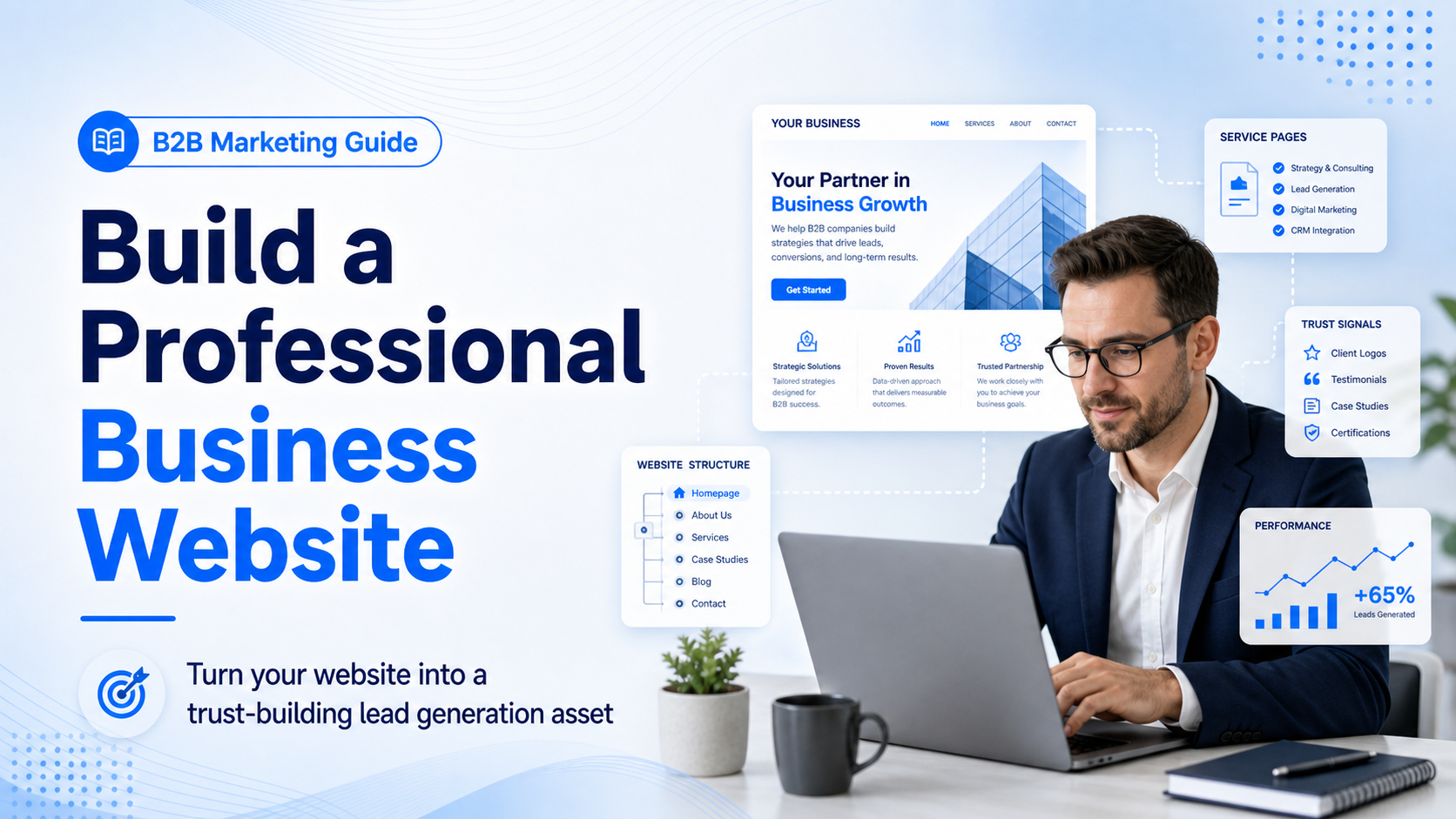
Getting traffic is not enough. Your website must convert visitors into leads.A good B2B landing page should have:Clear headline
Problem-focused copy
Service benefits
Trust proof
Simple contact form
Strong CTA
FAQs
TestimonialsAvoid too much clutter. B2B buyers want clarity. Tell them what you do, how you help, and what step they should take next.Strong CTA examples:Book a Free Consultation
Get a Free Marketing Audit
Request a Quote
Talk to Our Expert
Start Your Growth Strategy

Marketing without tracking is guesswork. You should measure what is working and what is not.Important B2B marketing metrics include:Website traffic
Organic keyword ranking
Lead conversion rate
Cost per lead
Email open rate
Ad performance
Sales calls booked
Customer acquisition cost
Return on investmentTracking helps you improve your strategy. For example, if blogs are bringing traffic but not leads, you may need better CTAs. If ads are getting clicks but no conversions, your landing page may need improvement.B2B marketing is not a one-time task. It is a continuous process of testing, improving, and scaling.
Here are the most effective B2B marketing channels:
SEO: Best for long-term organic traffic
LinkedIn: Best for networking and brand authority
Email Marketing: Best for nurturing leads
Google Ads: Best for high-intent leads
Content Marketing: Best for trust building
Webinars: Best for education and authority
Case Studies: Best for conversion
Retargeting Ads: Best for bringing back interested visitors
The right channel depends on your business type, budget, audience, and goal.
Many B2B businesses fail online because they make avoidable mistakes.Avoid these mistakes:Targeting everyone
Not having a clear offer
Ignoring SEO
Posting only sales content
Not following up with leads
Having a weak website
Not showing testimonials
Running ads without landing pages
Not tracking results
Using generic AI content without human touchIf you fix these mistakes, your marketing performance can improve quickly.
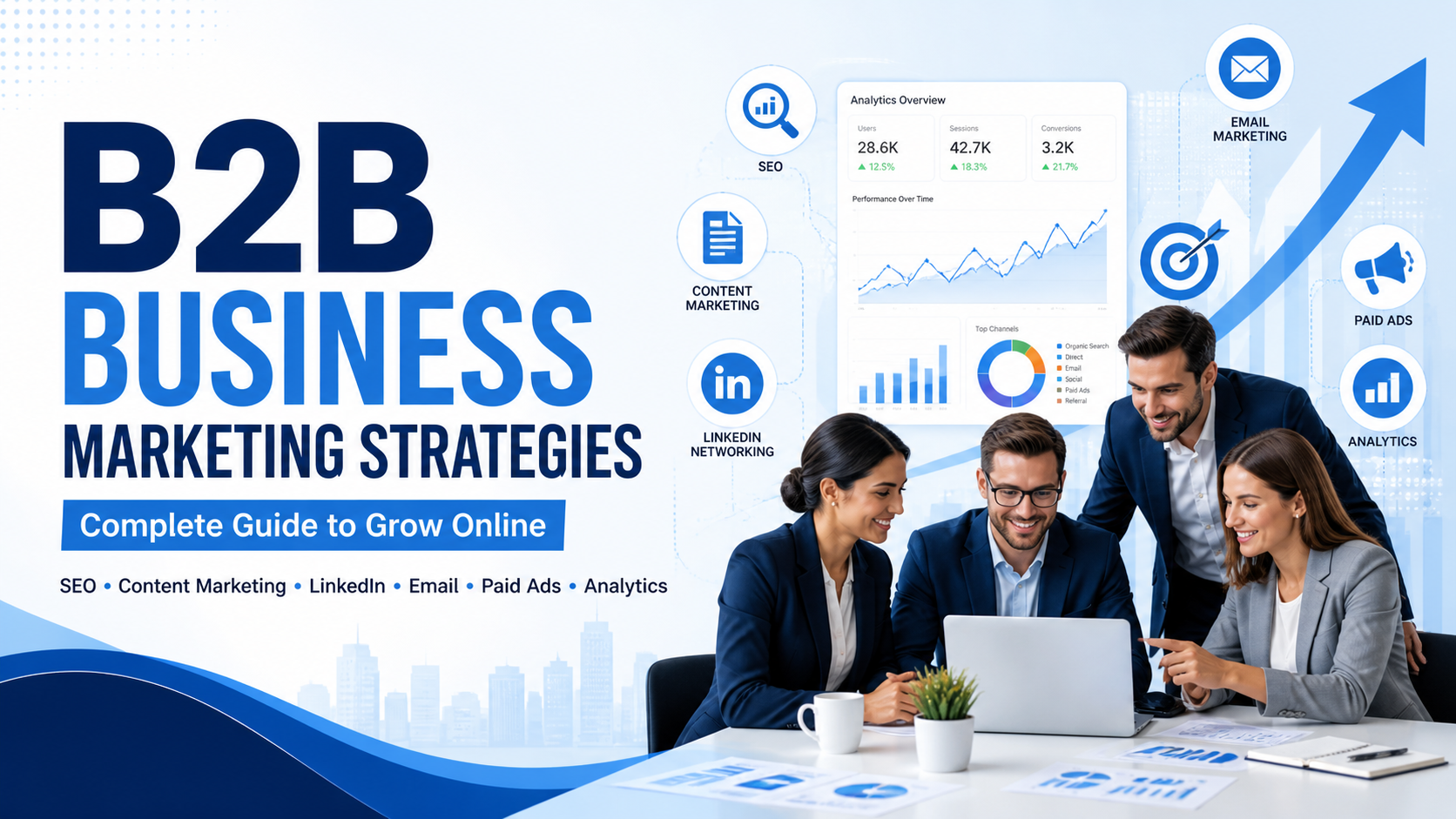
The best B2B marketing strategy is a combination of SEO, content marketing, LinkedIn, email marketing, paid ads, and strong follow-up. One channel alone is usually not enough.
You can generate B2B leads through SEO, Google Ads, LinkedIn outreach, lead magnets, email marketing, webinars, landing pages, and referral campaigns.
Yes, SEO is very useful for B2B businesses because it attracts people who are already searching for your service. It helps build long-term visibility and trust.
LinkedIn is one of the best platforms for B2B marketing. Google Search is also powerful because it captures high-intent buyers.
Paid ads can show results quickly, but SEO and content marketing usually take 3 to 6 months or more. The result depends on competition, budget, strategy, and consistency.
B2B business marketing is not about quick tricks. It is about building trust, solving real problems, and staying visible where your target customers are searching.To grow online, your business needs a professional website, SEO strategy, helpful content, LinkedIn presence, email follow-up, paid ads, case studies, and proper tracking. When these strategies work together, they create a strong system for lead generation and business growth.The most important thing is consistency. B2B buyers take time to trust a brand. But when your content, website, and communication show expertise, your business becomes the obvious choice.
Need help growing your B2B business online? Faisalty can help you with SEO, website design, digital marketing, lead generation, and online growth strategy. Contact us today and start building a stronger digital presence.