FAISALTY.COM

B2B Business Marketing Strategies to Grow Faster in 2026

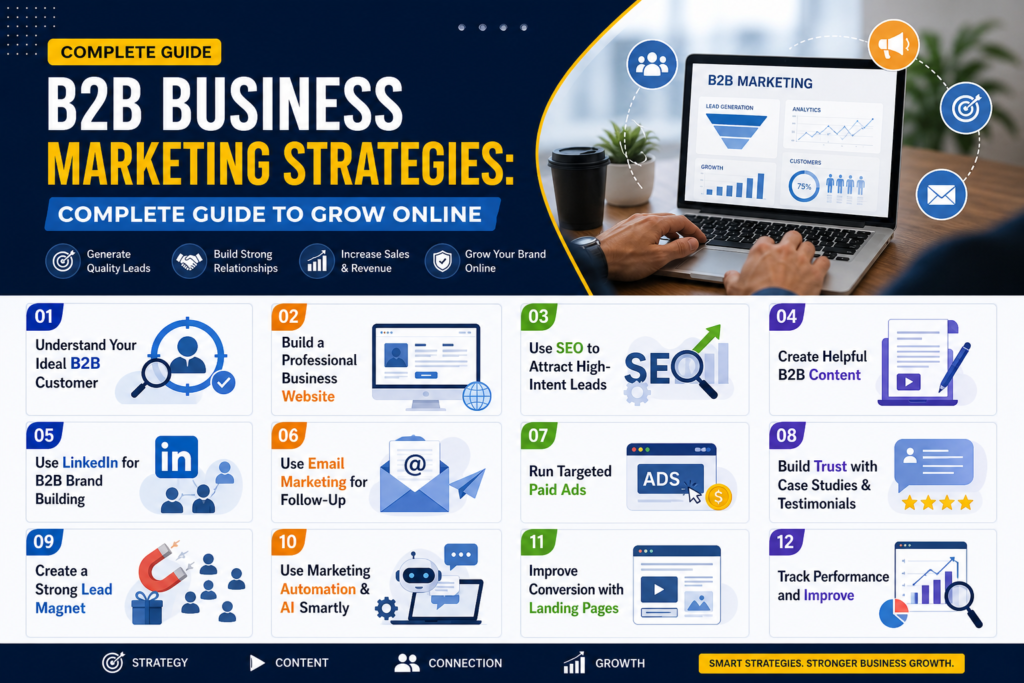
B2B Business Marketing Strategies: Complete Guide to Grow Online In today’s competitive market, running a B2B business is no longer only about offering a good service or product. Whether you provide software, manufacturing, consulting, wholesale, or professional services, growth now depends on how effectively you attract leads, build trust, and convert prospects into long-term clients. Many business owners struggle because they rely only on referrals and traditional networking. While those methods still work, they are no longer enough in a digital-first world. This is where smart B2B business marketing strategies make the difference. Unlike B2C, where customers may buy emotionally or impulsively, B2B buyers take time. They research, compare vendors, read reviews, ask for demos, and involve multiple decision-makers before purchasing. That means your marketing needs to educate, nurture, and build credibility before making a sale. In this guide, you will learn practical and proven B2B business growth strategies to generate leads, increase revenue, and grow online. What Is B2B Business? B2B stands for Business-to-Business. It refers to businesses that sell products or services to other businesses instead of individual consumers. Examples of B2B businesses: Digital marketing agencies Website development companies Software (SaaS) companies Manufacturers and wholesalers Consulting firms Logistics companies IT service providers For example, if a digital marketing agency provides SEO services to a real estate company, that is B2B.   Why Digital Marketing Matters for B2B Businesses Traditional sales methods like cold calling and referrals still have value, but modern buyers search online first. When businesses need a service provider, they often: Search on Google Check company websites Read reviews and case studies Visit LinkedIn profiles Compare competitors Request proposals online If your business is not visible online, you lose opportunities. Benefits of digital marketing for B2B businesses:   1. Better Lead Generation Digital channels help attract qualified prospects instead of random inquiries. 2. Builds Trust and Authority Content, testimonials, and case studies position your brand as an expert. 3. Shortens Sales Cycles Educated prospects make decisions faster. 4. Scalable Growth Unlike referrals, digital systems can generate leads consistently. 1. Build a Professional B2B Website Your website is your digital sales representative. A good B2B website should include:

B2B Business Marketing Strategies to Grow Faster in 2026 Read More »

“How to Get Clients for Your Digital Marketing Agency”

How to Get Clients for Digital Marketing Agency

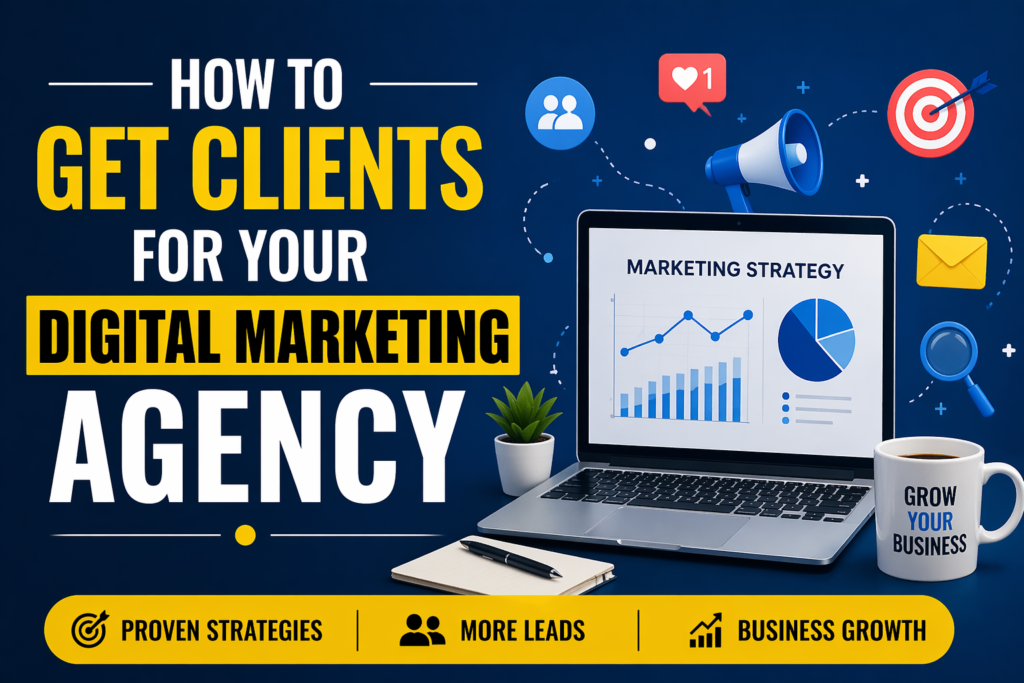
How to Get Clients for Digital Marketing Agency How to get clients for digital marketing agency is one of the biggest challenges for beginners and growing agencies. If you want more leads, better clients, and steady growth, this guide will show proven strategies that work.   Starting a digital marketing agency is exciting. You have the skills, tools, and confidence to help businesses grow online. But there’s one big challenge that almost every agency faces in the beginning — getting clients. No clients means no revenue. And without revenue, even the best agency can’t survive. The good news? Getting clients is not luck — it’s a strategy. If you follow the right approach, you can consistently attract high-paying clients for your digital marketing agency. In this guide, you’ll learn practical, real-world methods to get clients — even if you’re just starting out. 1. Build a Strong Online Presence First Before you look for clients, ask yourself one question: Q 👉     Would you choose your own agency based on your online presence? Ans👉   If your website, social media, or portfolio doesn’t look professional, clients won’t trust you. What is require: A professional website (like Faisalty.com) Clear services (SEO, Social Media, Ads, etc.) Portfolio or sample work Contact page with CTA (Call to Action)   Expert tip        Show results, not just services.       Instead of saying “We do SEO,” say:👉 “We helped a business grow traffic by 120% in 3 months.” 2. Social Media to Attract Clients Social media is one of the most powerful tools to get clients — and it’s free. Platforms to focus on: Instagram Facebook LinkedIn What to post: Client results (before/after) Tips & tricks (value content) Reels (short educational videos) Problem-solving posts   Example Hook: 👉         “Posting daily but still no sales? Here’s why…”                This type of content attracts business owners who need your help. 3. Start Cold Outreach (Smart Way)              Many beginners avoid cold outreach — but it works if done correctly. Where to find clients: Instagram business pages LinkedIn profiles Google Maps (local businesses)   How to message:          Don’t spam. Personalize your message. Example: “Hi, I saw your Instagram page. Your content is good, but you’re missing engagement opportunities. I have a few ideas that can help you get more leads. Can I share?” This feels natural — not salesy. 4. Offer Free Value First People don’t trust strangers easily. So instead of selling immediately, give value first. Ideas: Free audit (Instagram / Website / Ads) Free strategy call Free SEO analysis          When you help someone for free, they see your expertise — and trust builds automatically. 5. Use Freelancing Platforms If you’re starting from zero, freelancing platforms can help you get your first clients. Best platforms: Upwork Fiverr Freelancer Tips to stand out: Optimize your profile Add portfolio Use client-focused descriptions Instead of saying:“I do digital marketing” Say:👉 “I help small businesses generate leads and increase sales through digital marketing.” 6. Leverage Local Businesses Local businesses are the easiest clients to close. Why?Because most of them are not using digital marketing properly. How to approach: Visit local shops Find them on Google Maps Check their Instagram/Facebook Pitch idea: “Your competitors are getting customers online. You’re missing out. I can help you bring more customers through Instagram and Google.” Keep it simple and result-focused. 7. Build Personal Branding Clients don’t just hire agencies — they hire people they trust. That’s why personal branding is powerful. Start doing this: Share your knowledge daily Post reels explaining marketing tips Show your face (face-cam videos) Why it works: People connect with people, not logos. If they trust you, they will hire you. 8. Ask for Referrals http://internal linking toolYour first few clients can bring many more clients. After delivering results, ask: “Do you know anyone who needs help with marketing?” Happy clients are your best marketing tool. 9. Run Paid Ads (Advanced Strategy) Once you have some budget, invest in ads. Platforms: Facebook Ads Instagram Ads Google Ads Strategy: Offer free consultation Target business owners Use strong hook Example: 👉 “Struggling to get leads for your business? Get a free marketing strategy call.” Ads help you scale faster. 10. Create High-Value Content (SEO + Blogs) Content marketing is a long-term strategy, but it brings consistent clients. What to create: Blogs (like this one) YouTube videos SEO articles Example topics: “How to grow business online in India” “Why your Instagram is not getting sales” When people search these topics, they find you — and become your clients. 11. Join Business Communities You don’t need to find clients everywhere — go where clients already are. Places to join: Facebook groups LinkedIn communities WhatsApp business groups Strategy: Answer questions Give value Avoid direct selling When people see your expertise, they will reach out to you. 12. Create a Simple Offer Many agencies fail because they confuse clients. Don’t offer 10 services. Instead, create a simple offer: 👉 “We help small businesses get 20–30 leads per month using Instagram marketing.” Clear offer = More clients 13. Follow Up Consistently Most clients don’t respond immediately. That doesn’t mean they are not interested. Follow-up example: “Hey, just checking if you got a chance to review my message. I’d love to help you grow your business.” Many deals close in follow-ups. 14. Build Trust with Proof Clients don’t believe promises — they believe proof. Show: Screenshots of results Testimonials Case studies Even small results matter in the beginning. 15. Stay Consistent Getting clients is not a one-day job. You need consistency in: Posting content Outreach Learning Improving Most people quit early — that’s why they fail. If you stay consistent, success is guaranteed. Final Thoughts Getting clients for a digital marketing agency is not difficult — but it requires the right strategy and patience. Start with: Strong online presence Content creation Outreach Value offering Then

How to Get Clients for Digital Marketing Agency Read More »

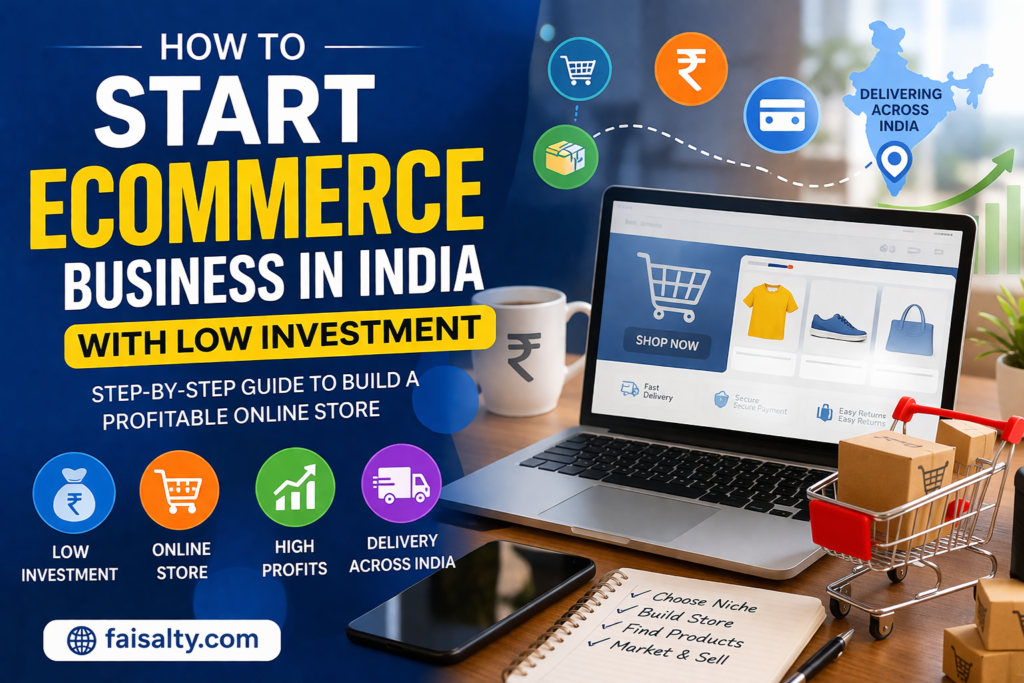
How to Start E-commerce Business in India with Low Investment

How to Start E-commerce Business in India with Low Investment If you are searching for how to start e-commerce business in India with low investment, you are in the right place. Today, starting an online business is easier than ever, and with the right strategy, you can build a profitable e-commerce store with very low investment. This step-by-step guide will help you understand everything from choosing a niche to getting your first customers. Why Start an E-commerce Business in India? India is one of the fastest growing E-commerce markets in the world. Here’s why starting now is a smart move: Over 900 million internet users Increasing trust in online shopping Growth of digital payment systems like UPI Low startup cost compared to offline businesses Ability to reach customers Unlike traditional businesses, E-Commerce allows you to start small and scale gradually without heavy investment. Step 1: How to Start E-commerce Business in India with Low Investment Before starting, you need to decide how you want to sell products online. How to Start E-commerce Business in India with Low Investment, Here are some low-investment e-commerce models:   1. Dropshipping No need to keep stock You sell products, supplier ships them Low risk and low investment 2. Reselling (Meesho Model) Sell products from wholesalers Earn margin on each sale No manufacturing required 3. Choose the Right E-commerce Business Model in India Sell custom Ladies bags, sling bag, etc. Products printed after order 4. Handmade or Local Products Sell handmade goods or local items High profit margins For beginners, dropshipping, Amazon, Flipkart or reselling is the best low-investment option.  Step 2: Select a Profitable Niche Choosing the right Decision is very important for success. How to pick a niche. Solve a problem Check demand on Google Trends Analyze competitors   Profitable ecommerce niches in India: Fashion & accessories Home decor Fitness products Beauty & skincare Mobile accessories 👉 Tip: Focus on a specific audience like “women fitness products” instead of general products. Step 3: Create Your E-commerce Website Your website is your online store. Since you already have faisalty.com, you can use it as your ecommerce platform.   Platforms to build e-commerce site: Shopify (easy but paid) WooCommerce (best for WordPress users) Wix ecommerce Amazon  Flipkart    Important pages for your website: Homepage Product pages About Us Contact page Privacy Policy Tips for a high-converting website: Use clean design Fast loading speed Mobile-friendly layout High-quality product images Step 4: Source Products at Low Cost Finding affordable products is key to maintaining profit.   Where to source products in India: Wholesale markets (Delhi, Mumbai) Online suppliers Local manufacturers Dropshipping suppliers Tips:   Compare prices from multiple suppliers Order samples before selling Focus on quality Step 5: Set Up Payment & Delivery To run a successful ecommerce business, you need smooth payment and delivery systems. Payment options: UPI Debit/Credit cards Wallets Cash on Delivery (COD) Delivery partners: Delevery Shiprocket India Post E-cart 👉 COD is very important in India as many customers prefer it. Step 6: Register Your Business You can start without registration, but for long-term growth: Register as a sole proprietorship Get GST number (if required) Open a business bank account This helps in scaling your business and building trust. Step 7: Promote Your Ecommerce Business Without marketing, your ecommerce store will not get sales. Best low-cost marketing strategies: 1. Social Media Marketing Use Instagram, Facebook Post reels and product videos Engage with audience 2. SEO (Search Engine Optimization) Write blogs on your website (like this one Target keywords like: “low investment ecommerce business India” “start online business from home India” 3. WhatsApp Marketing Share products in groups Broadcast offers 4. Influencer Marketing Collaborate with small influencers Low cost but high reach 5. Paid Ads Start with small budget Use Facebook & Instagram ads Step 8: Focus on Customer Experience Customer satisfaction is the key “starting an ecommerce business in India” with Low Investment to long-term success. How to build trust: Provide fast delivery Offer easy returns Give quick customer support Use genuine product images Happy customers bring repeat business and referrals. Step 9: Scale Your Business Once you start getting sales: Add more products Improve website design Run ads for scaling Build your brand Scaling is where real profit begins. Common Mistakes to Avoid Many beginners fail due to these mistakes: Choosing the wrong niche Ignoring marketing Poor product quality Slow website No customer support Avoid these, and your chances of success will increase significantly. Estimated Cost to Start Ecommerce in India Here’s a rough idea: Domain & hosting: ₹1000–₹3000/year Website setup: ₹0–₹5000 Marketing: ₹1000–₹5000 (initial) Product cost: Depends on model 👉 You can start with as low as ₹5000–₹10,000 Final Thoughts Starting “start an online business in India” is not only possible but highly profitable if done correctly. With the right strategy, consistency, and smart marketing, you can build a successful online business from scratch. Your website faisalty.com can become a powerful ecommerce brand if you focus on quality content, SEO, and customer satisfaction.

How to Start E-commerce Business in India with Low Investment Read More »

how to grow business online in India

How to Grow Business Online in India: A Complete Guide for Small Businesses Table of Contents Introduction In today’s digital world, growing a business is no longer limited to offline marketing, local networking, or word-of-mouth promotion. If you want your business to survive and grow in a competitive market, you need to build a strong online presence. That is why many business owners are asking the same question: How to grow business online in India? Whether you run a startup, local shop, coaching center, service-based business, eCommerce store, or professional agency, online marketing can help you reach more people, generate quality leads, and increase your sales. At Faisalty.com, we understand that many small business owners want to grow online but often feel confused about where to start. With so many digital platforms and marketing options available, it can be difficult to know what actually works. The good news is that growing your business online does not always require a huge budget. What it really needs is the right strategy, consistency, and smart digital marketing. In this guide, we will explain the most effective ways to grow your business online in India and build a long-term digital presence. Why Online Business Growth Matters in India India is one of the fastest-growing digital markets in the world. Millions of users search online every day for products, services, businesses, and solutions. Before buying anything, people usually: Search on Google Check Instagram or Facebook pages Read customer reviews Compare websites and offers Contact businesses through WhatsApp This means if your business is not visible online, you are likely losing customers to competitors who are already marketing their services digitally.   Benefits of growing your business online Reach more potential customers Build trust and authority Increase inquiries and leads Improve brand visibility Generate more sales Compete with bigger brands In simple words, online growth is no longer optional — it is essential for modern businesses in India. 1. Build a Professional Website for Your Business Your website is the foundation of your online presence. It is often the first place where potential customers learn about your brand, services, and credibility. A professional website helps your business look serious, trustworthy, and ready to serve customers.                            Why a website is important It gives your business a professional identity Customers can easily understand your services It helps you appear on Google search results It generates leads and contact inquiries It works 24/7 for your business   At Faisalty.com, we always recommend businesses to start with a well-designed and SEO-friendly website because it becomes the center of all your online marketing efforts. 2. Use SEO to Rank Your Business on Google If you want long-term and sustainable business growth online, SEO (Search Engine Optimization) is one of the most powerful tools. SEO helps your website appear on Google when people search for services related to your business.   . Why SEO is important for business growth It brings free organic traffic It attracts people already interested in your service It improves brand trust It gives long-term results It reduces dependency on paid ads Main parts of SEO Keyword research On-page SEO Technical SEO Blog content optimization Backlink building Local SEO SEO takes time, but once your business starts ranking, it can bring regular traffic and qualified leads without daily advertising costs. 3. Create a Strong Google Business Profile If your business serves customers in a specific city or area, then Google Business Profile is extremely important. When users search for businesses “near me,” Google often shows local business listings before websites. Benefits of Google Business Profile Helps your business appear on Google Maps Increases local visibility Brings direct phone calls and inquiries Builds trust through customer reviews Supports local SEO efforts   How to optimize your profile Add your business name properly Use the correct category Add phone number and address Upload high-quality photos Keep business hours updated Ask customers for reviews For local businesses in India, this can be one of the fastest ways to attract nearby customers online.   4. Grow Your Brand Through Social Media Marketing Social media is one of the best ways to connect with your audience and build brand awareness. Platforms like Instagram, Facebook, YouTube, and LinkedIn allow businesses to engage directly with customers and stay visible in the market. Best social media platforms for businesses Instagram Facebook LinkedIn YouTube Pinterest What to post on social media Service promotions Product photos Customer testimonials Educational tips Behind-the-scenes content Offers and discounts Reels and short videos                                                                                                                                                                                                             At Faisalty.com, we believe that social media works best when it is used for branding, engagement, and relationship building, not just direct selling 5. Start Content Marketing to Build Trust Content marketing is one of the smartest ways to grow a business online.  When you create helpful content for your target audience, you naturally attract people who are interested in your services.   Content marketing examples Blog posts Website articles SEO pages Educational Instagram posts YouTube videos FAQs and guides Why content marketing works Customers do not always buy immediately.They first want to understand your expertise and trust your brand. That is why content helps you: Build authority in your niche Improve SEO rankings Educate your audience Increase website traffic Generate long-term leads For example, if you run a digital marketing business, publishing blogs

how to grow business online in India Read More »

Digital Marketing Strategy for Startups

Digital Marketing Strategy for Startups: Complete Guide to Grow Online Starting a new business is exciting, but growing it in today’s competitive market can be challenging. No matter how good your product or service is, your startup needs visibility, trust, and customers to survive and grow. That is where a digital marketing strategy for startups becomes essential. A startup without marketing is like a shop without a signboard. If people cannot find your business online, they will never know what you offer. In the digital age, every startup must use smart online marketing methods to build brand awareness, generate leads, and increase sales. In this blog, we will explain the best digital marketing strategy for startups, how it works, and which techniques can help your startup grow faster in 2026 and beyond. Why Digital Marketing Is Important for Startups Most startups have limited budgets, small teams, and strong competition. Traditional advertising like newspaper ads, hoardings, or TV commercials can be expensive and difficult to measure. Digital marketing, on the other hand, is cost-effective, trackable, and scalable. Here are a few reasons why digital marketing for startups is important: It helps startups reach the right audience It builds trust and online visibility It generates leads and sales faster It supports long-term business growth It is affordable compared to traditional marketing It allows startups to compete with bigger brands A well-planned startup digital marketing strategy can help your business grow even if you are just starting with a small budget. 1. Build a Strong Brand Foundation First Before running ads or posting on social media, your startup needs a clear identity. Your digital marketing will only work well if people understand who you are, what you do, and why they should choose you.   What your startup should define first:   Your brand name Logo and color theme Target audience Unique selling point (USP) Main products or services Brand tone and messaging For example, if your startup provides web design services for small businesses, your messaging should clearly focus on affordability, modern design, and business growth. A strong foundation makes your digital marketing strategy for startups more effective because all your content and promotions stay consistent.   2. Create a Professional Website Your website is the center of your digital marketing efforts. It is your online office, portfolio, lead generation tool, and brand identity — all in one place. A startup should never rely only on Instagram or WhatsApp for business. A professional website gives trust and helps customers take your business seriously.   Your startup website should include:   Homepage About Us page Services or Products page Contact page Blog section Call-to-action buttons Mobile-friendly design Fast loading speed Why a website matters for startup marketing A website helps you: Rank on Google Collect leads Show your services professionally Build credibility Convert visitors into customers If you want long-term growth, a website is one of the most important parts of your digital marketing strategy for startups. 3. Focus on SEO for Long-Term Growth SEO (Search Engine Optimization) is one of the most powerful marketing channels for startups. It helps your website appear on Google when people search for your services or products. For example, if someone searches: “best digital marketing agency for startups” “startup website design services” “SEO services for small business” …your startup should have a chance to appear in those search results.   Benefits of SEO for startups   Free organic traffic Better online visibility More website visitors High-quality leads Long-term business growth Basic SEO strategy for startups Your startup should work on: Your startup should work on: Find the right keywords your audience is searching for, such as: digital marketing strategy for startups startup marketing plan affordable marketing for startups online marketing for startup businesses On-Page SEO Optimize: Title tags Meta descriptions Headings Image alt text Internal links URL structure Content SEO Write helpful blogs, service pages, and landing pages using relevant keywords naturally. Technical SEO Make sure your website is: Fast Mobile-friendly Secure (HTTPS) Easy to crawl by Google SEO is not instant, but it is one of the best long-term investments for any startup. 4. Start Content Marketing Early Content marketing is a smart way to attract potential customers by providing valuable information. Instead of always selling, you educate your audience and build trust.   Types of content startups can create   Blog posts Social media content Reels and short videos Case studies Email newsletters Infographics FAQs Landing page content Best content ideas for startups If your startup is in digital services, you can write topics like: How to grow your business online Best startup marketing strategies SEO tips for small businesses How to generate leads online Why every startup needs a website When you publish useful content regularly, Google starts trusting your site more, and customers start trusting your brand more. That is why content marketing is a key part of any successful digital marketing strategy for startups.   5. Use Social Media to Build Awareness Social media is one of the fastest ways for startups to reach people and build brand awareness. Platforms like Instagram, Facebook, LinkedIn, and YouTube can help startups grow organically and through paid promotion. Best social media platforms for startups   Instagram – for brand visibility, reels, and engagement Facebook – for local business reach and paid ads LinkedIn – for B2B startups and professional networking YouTube – for educational videos and brand trust Social media strategy for startups Your startup should: Post consistently Share educational content Show behind-the-scenes work Use reels and short videos Share customer feedback Add call-to-actions Engage with comments and messages Example post ideas Startup journey updates Service highlights Tips and tutorials Client success stories Before/after results FAQs Industry trends Social media may not always bring instant sales, but it plays a huge role in branding and audience building. 6. Run Paid Ads for Faster Results While SEO and content take time, paid advertising can bring immediate traffic and leads. If your startup wants fast growth, then

Digital Marketing Strategy for Startups Read More »